

How To Clean Kitchen Cabinets
Quick Summary:
- Use warm water and mild dish soap for regular cleaning
- Use a vinegar solution to remove grease buildup
- Apply baking soda paste for stubborn stains
- Avoid abrasive cleaners on wooden cabinets
- Always wipe with a dry microfiber cloth after cleaning
Your home is one of your most important investments. Your kitchen cabinets are among the things most likely to accumulate bacteria, dirt, and grease. Constant cooking, temperature fluctuations, and frequent use by family members compel regular maintenance. Your kitchen and your cabinets, the central hub in your home, demand both functionality and cleanliness.
If you’re wondering how to clean kitchen cabinets, the right techniques can remove grease, protect surfaces, and restore their shine.
Most wooden cabinet manufacturers provide cleaning manuals with specific instructions. The thumb rule is to use water or mild dish soap with a soft, clean cloth. Common household cleaning agents like baking soda and vinegar are effective and safe. Always choose non-abrasive cleaners to preserve the surface of your cabinets.
These well-researched and proven kitchen cabinet cleaning hacks will help you keep your kitchen cabinets Bahamas clean and looking as fresh as new.
Basic Cleaning Method for Kitchen Cabinets
Before trying advanced cleaning hacks, start with a simple routine:
- Dust cabinets using a dry microfiber cloth
- Mix warm water with mild dish soap
- Wipe gently using a soft cloth or sponge
- Rinse with a clean, damp cloth
- Dry thoroughly to prevent moisture damage
This method works well for everyday cleaning and maintenance.
8 Cleaning Hacks That Will Make Your Kitchen Cabinets Look Brand New
When it comes to cleaning your kitchen, the countertops, the tiles, and the flooring are the areas that catch your attention by default. The most ignored part of the kitchen cleaning process? Your kitchen cabinets!
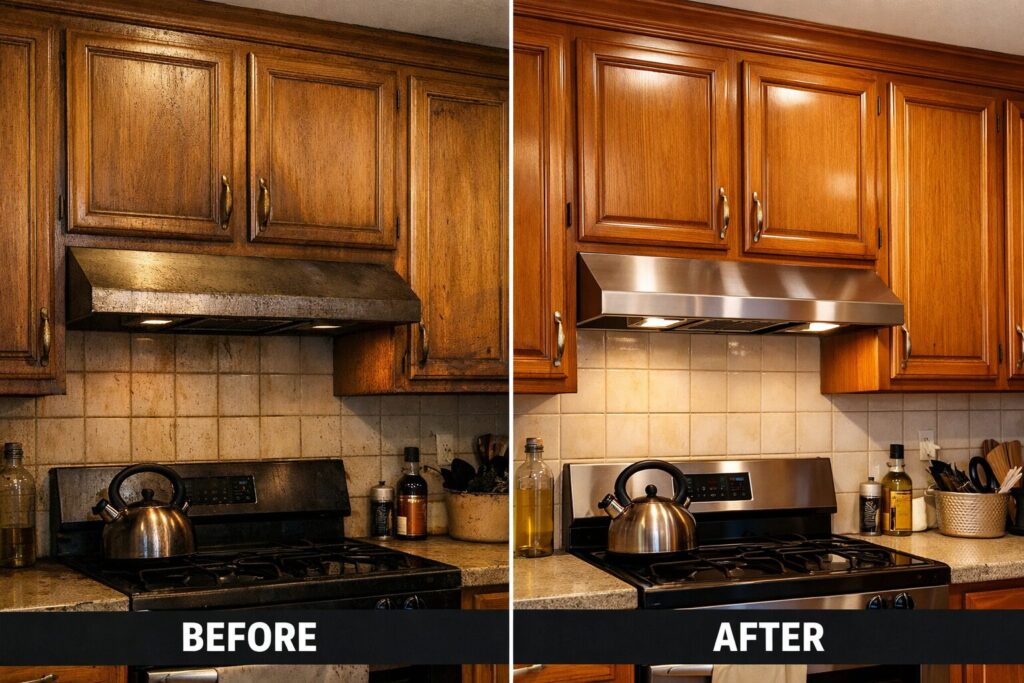
While grease and grime from kitchen activities are regularly cleaned up from the countertops, flooring, and wall tiles, they accumulate on the cabinet surfaces. Over time, this can make your cabinet look jaded, dirty, and old. Here are a few kitchen cabinet cleaning hacks that can make your kitchen cabinets in the Bahamas look brand new again.
How to Clean Kitchen Cabinets with Vinegar Solution
Vinegar is a natural cleaner for dealing with grease-laden cabinets. Mix vinegar and warm water in equal proportions and use a spray bottle to spread the mixture on the cabinets. Let it remain on the surface for a few minutes, and then wipe off gently with a soft cloth.
For stubbornly grimy cabinets, adding a few drops of dishwashing detergent to the mixture can give wonderful results.
Remember These Points:
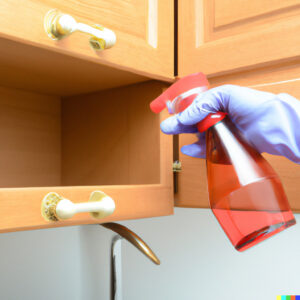 When cleaning kitchen cabinets using a vinegar solution, exercise caution, especially when the cabinets have wooden surfaces. Many sources recommend a 50/50 vinegar and warm water mix to combat greasy cabinets, but use your own judgment, as vinegar is highly acidic and can harm wood if not properly diluted.
- Conducting a test in an inconspicuous area beforehand is highly recommended.
- It is also advisable to incorporate liquid dishwashing detergent to enhance grease removal.
- Wipe cabinets with a microfiber cloth.
- Follow up with a thorough cleaning with a clean, damp cloth and a final drying with another microfiber cloth.
Before using any cleaning products, always verify that the wood cabinet finish is in good condition. Seek professional advice when in doubt. It will ensure the most suitable and safe cleaning approach.
Olive Oil + Vinegar Mixture for Shine
This is one of the best kitchen cabinet cleaning hacks for both cleaning and polishing.
Mix:
- 4 tablespoons vinegar
- 2 tablespoons olive oil
- 2 cups warm water
Spray lightly and wipe clean. This helps remove dirt while adding a natural shine.
Shake well before each use.
If you are uncertain about the type of vinegar to use for cleaning your kitchen cabinets, rest assured that any variety will work fine. While many prefer distilled white vinegar as the go-to option, other types, such as apple cider vinegar, are equally effective. You can also order specially labeled cleaning vinegar, which is available at leading stores.
For those sensitive to the strong odor of vinegar, there are scented alternatives that provide a fresh and clean aroma in your kitchen. Consider using lavender-scented cleaning vinegar or a pre-mixed solution of all-purpose vinegar. These solutions come in various appealing scents, including eucalyptus, fresh lime mint, lavender, or sweet mandarin.
These scents are typically infused with olive oil to enhance the cleaning outcomes, providing you with both a pleasant fragrance and effective cleaning power.
How to Clean Kitchen Cabinets with Baking Soda + Vegetable Oil Mix for Deeper Cleaning
For heavily stained cabinets, baking soda works extremely well.
Mix:
- 2 parts baking soda
- 1 part vegetable oil
Apply as a paste and gently scrub with a soft cloth or toothbrush.
This method is ideal for:
- Grease buildup
- Sticky surfaces
- Hard-to-reach areas
Pro Tips:
- Always test before full application
- Focus on high-touch areas
- Rinse thoroughly after cleaning
- Dry immediately to prevent residue
Remember These Points:
You can thoroughly clean kitchen cabinets using a baking soda and vegetable oil mix. Follow these steps for the best outcomes:
- Don’t apply across the cabinets directly.
- Make sure your pre-test is in a discreet area of the cabinet, such as the side hidden from view.
- Before applying the mixture across the entire surface.
- This will ensure the wood or finish will not be adversely affected if the cleaning mixture is too strong.
Apply the mixture using a soft cloth or sponge on the larger areas. For challenging spots, an old toothbrush or a non-scratching pad can be used. Make sure you focus on the tough spots adequately to ensure their easy removal.
After cleaning, clean the cabinets with fresh water and dry them thoroughly with a soft cloth to prevent residual formation.
Always choose a vegetable oil such as olive oil or coconut oil to mix with the vinegar. They are mild and less prone to becoming rancid compared to other oils.
By adhering to these precautions, you can confidently and effectively utilize the baking soda and vegetable oil mix to deep-clean your kitchen cabinets without risking any damage. This method ensures a thorough cleaning, leaving your cabinets refreshed and free from grime.
How to Clean Kitchen Cabinets with Ammonia + Water Mixture
Ammonia is a proven dirt and grease remover, but it is not generally used as it is too harsh. You can leverage its benefits by using a diluted mixture. Mix one tablespoon of ammonia with two cups of water. Mix it properly. If you find the mixture thick, add more water. Use a clean cloth. Dip the mixture and gently apply it to the kitchen cabinets to quickly remove the dirt and grime layers. Do not overspray, and do not let the mixture remain on the shutters for more than a couple of minutes.
Remember These Points
- Ammonia is a potent cleaning agent effective against grease, but you must use an ammonia-water mixture with extreme care when cleaning kitchen cabinets.
- The harsh nature of ammonia can cause damage to the finish of wood cabinetry. Safe options include oil soap cleaners or cleaning solutions specially designed for wood components.
- When cleaning glass cabinet doors, take precautions to shield the wood part from overspray.
How to Clean Kitchen Cabinets with Baking Soda + Lemon
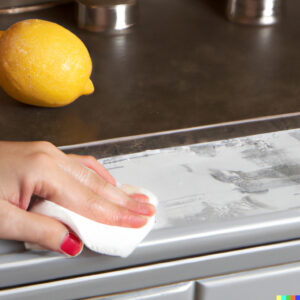 If you are wondering how to clean kitchen cabinets, this is one of the proven ways of doing it right. It’s a winning combo for any type of cleaning that involves the removal of stubborn layers of dirt. It works amazingly well for making designer kitchen cabinets look new and shiny.
Mix one part baking soda with one part lemon juice and two parts of warm water. Use a spray bottle to spread the mixture on the cabinet surface. Leave it on for a couple of minutes. Rinse and repeat if needed. Use a clean cloth to wipe the cabinet dry.
Remember These Points
Allow the baking soda and lemon mixture to sit on the kitchen cabinets for approximately two to three minutes before wiping them down. This gives the baking soda enough time to address stubborn stains or grease effectively. After applying, use a soft sponge or cloth to gently scrub the cabinets, then rinse them thoroughly with clean water. To prevent any residue, ensure the cabinets are dried with a soft cloth after the cleaning is completed.
How to Clean Cabinet Glass Using Glass Cleaner
To keep cabinet glass clean and streak-free:
- Use a high-quality glass cleaner
- Spray lightly
- Wipe with a lint-free cloth
This keeps your kitchen looking polished and bright.
Remember These Points
- For stubborn spots, let the cleaner sit for a few seconds before wiping.
- Ensure the cloth is clean to avoid transferring dirt back onto the glass.
- Regular cleaning with a suitable glass cleaner keeps your cabinet glass sparkling
Glass cleaner is an effective way to keep your kitchen’s wooden cabinet glass spotlessly clean. This simple hack will ensure that your kitchen remains sparkling clean at all times.
How to Polish Kitchen Cabinets for Long-Term Shine
Polishing helps maintain the natural beauty of your cabinets.
- Use a microfiber cloth
- Apply a small amount of wood polish
- Rub gently along the grain
Regular polishing extends cabinet life and improves appearance.
Use An Eraser To Remove Scuffs
Scuffs are surface-level marks caused by frequent contact with fingers or objects. To remove scuffs from your wooden kitchen cabinets, use a clean, soft eraser. Gently rub the eraser over the scuff marks, applying light pressure to avoid damaging the wood.
Remember These Points
- The eraser helps remove the scuff without scratching the surface.
- Wipe the area with a damp cloth to remove any eraser residue.
- For best results, follow up with a wood polish to restore the cabinet’s shine.
This simple technique is effective for maintaining the pristine appearance of your wooden cabinets.
FAQ: Kitchen Cabinet Cleaning Tips and Tricks
How often should you clean kitchen cabinets?
For best results, lightly clean your kitchen cabinets every 1–2 weeks to remove surface dust, grease, and fingerprints. A deeper cleaning should be done once a month, especially in areas near the stove where grease builds up faster. Regular maintenance prevents stubborn grime and keeps cabinets looking new for longer.
What is the best cleaner for greasy kitchen cabinets?
A mixture of warm water and mild dish soap is the safest and most effective option for everyday grease removal. For heavier buildup, a diluted vinegar solution works well to cut through grease naturally. Avoid harsh chemical cleaners, especially on wooden cabinets, as they can damage the finish over time.
Can you use vinegar on wooden kitchen cabinets?
Yes, vinegar can be used on wooden cabinets, but it must always be diluted with water to prevent damage. A 50/50 mix is commonly used, but for delicate finishes, you may want to use a weaker solution. Always test on a small hidden area first and avoid frequent use, as vinegar’s acidity can wear down protective coatings.
How do you clean sticky kitchen cabinets?
Sticky cabinets are usually caused by grease buildup. To clean them effectively, use a baking soda paste or a dish soap solution to break down the residue. Gently scrub the surface with a soft cloth or sponge, then rinse with a damp cloth and dry thoroughly. Regular cleaning helps prevent stickiness from returning.
Looking to buy the best kitchen cabinets in the Bahamas? Try Specialty Kitchen, your most trusted resource for everything you need to make your kitchen look stunning and modern.

Recent Comments